Global Advanced Polymers & Industrial Materials Intelligence Network





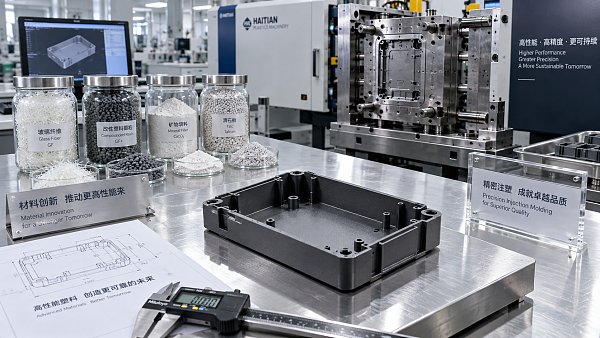
 How filler selection affects low warpage compound formulationLow warpage compound formulation starts with smarter filler selection. Explore how glass, minerals, and hybrid systems balance shrinkage, stiffness, and reliable part flatness.
- What to verify before choosing a carbon fiber reinforced compounds supplierChoose a carbon fiber reinforced compounds supplier with confidence. Verify specifications, process stability, quality controls, compliance, and total part cost before approval.
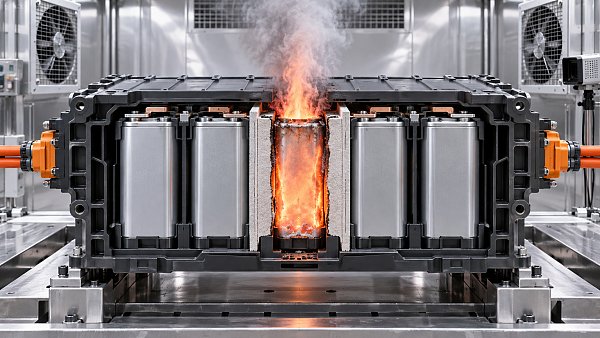
- How flame retardant battery housing materials affect thermal runaway safetyFlame retardant battery housing materials improve thermal runaway safety by slowing flame spread, preserving insulation, and supporting smarter enclosure design.
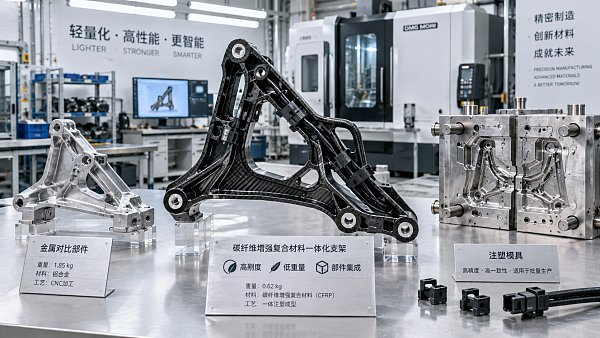
- When carbon fiber reinforced compounds justify their cost in lightweight partsCarbon fiber reinforced compounds for lightweight parts can justify their premium through higher stiffness, part consolidation, and lower lifecycle costs. Explore the key decision factors.
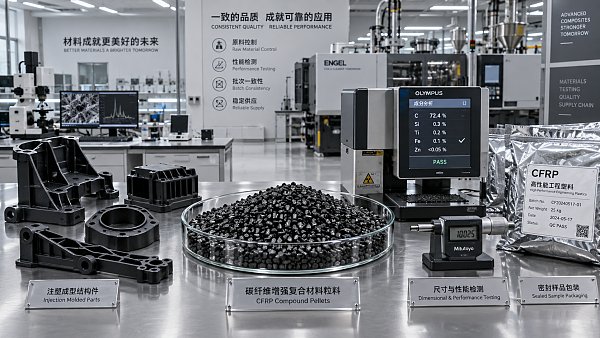
- What to verify before choosing a carbon fiber reinforced compounds supplierChoose a carbon fiber reinforced compounds supplier with confidence. Verify specifications, process stability, quality controls, compliance, and total part cost before approval.
- When carbon fiber reinforced compounds justify their cost in lightweight partsCarbon fiber reinforced compounds for lightweight parts can justify their premium through higher stiffness, part consolidation, and lower lifecycle costs. Explore the key decision factors.
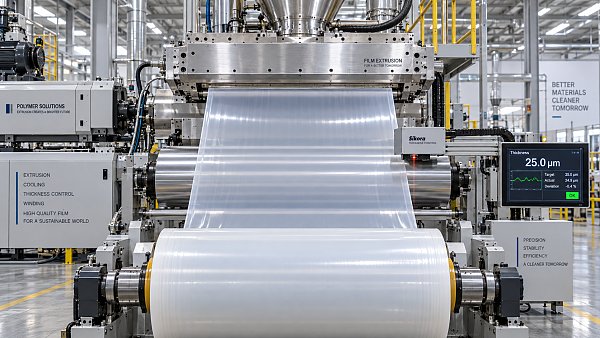
- How rheological shear affects gauge uniformity in film extrusionRheological shear in film extrusion drives gauge variation. Discover how viscosity, die balance, temperature, and process controls improve film consistency and reduce waste.
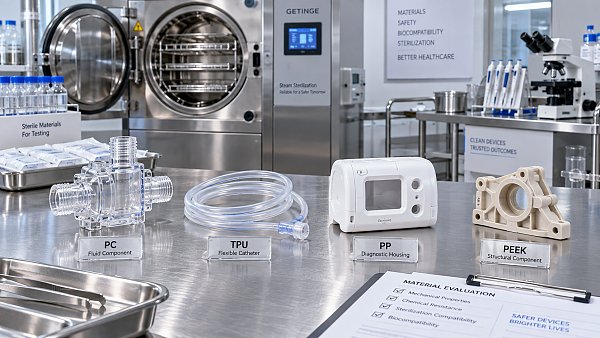
- FDA-Approved Plastics for Medical Devices: Material Selection by Device UseFDA approved plastics medical devices: learn how to select medical-grade polymers by device use, sterilization, biocompatibility, and supply-chain control.
Extrusion & Processing Systems
- How filler selection affects low warpage compound formulationSep 26, 2026Low warpage compound formulation starts with smarter filler selection. Explore how glass, minerals, and hybrid systems balance shrinkage, stiffness, and reliable part flatness.
- Common Twin-Screw Extrusion Defects and How to Troubleshoot ThemSep 15, 2026What are the common defects in twin-screw extrusion and how to troubleshoot them? Explore practical solutions for surging, voids, gels, discoloration, poor dispersion, and unstable output.
- Which Fillers Increase Compound Stiffness Without Causing Brittleness?Sep 15, 2026What filler types improve compound formulation stiffness without brittleness? Compare talc, wollastonite, mica, calcium carbonate, and glass fiber for durable designs.
Specialty Films & Substrates
Adhesives & Polyurethane
Explore adhesives and polyurethane products for industrial applications, offering reliable bonding performance and versatile material options.
- When UV curing structural adhesives suit high-speed assembly linesUV curing structural adhesives for high-speed assembly: assess light access, joint design, cure control, and durability to build faster, reliable production lines.
- Choosing Thermal Interface Materials for High-Power Electronics AssembliesThermal interface material power electronics guide: compare TIM conductivity, insulation, reliability, and assembly fit for high-power designs.
- How to Select PSA Thickness for Flexible Display BondingHow to select pressure-sensitive adhesive thickness for flexible display bonding: balance optics, flex durability, impact protection, and lamination yield.
- What Fatigue Tests Must Aerospace Structural Adhesives Pass?What fatigue tests should structural adhesives pass for aerospace use? Explore cyclic shear, crack growth, peel, spectrum loading, and environmental durability requirements.
- How film converting for release liners prevents coating defectsFilm converting for release liners prevents coating defects through precise tension, surface treatment, cleanliness, curing, and winding controls. Explore proven quality practices.
- When do high heat polymers for industrial machinery prevent seal failure?High heat polymers for industrial machinery help prevent seal failure under extreme temperature, pressure, chemical exposure, and motion. Discover material selection and testing strategies for longer-lasting seals.
- Which Sealants Resist Both Water and Fuel in Automotive Use?What sealants resist both water and fuel for automotive use? Compare FVMQ, FKM, nitrile, and polysulfide options for durable, leak-resistant automotive sealing.
- What TPU Hardness Is Best for Phone Case Protection?What is the best TPU hardness for phone case protection? Explore why Shore A 85–95 offers the ideal balance of shock absorption, secure fit, grip, and long-lasting everyday durability.
- How to evaluate low VOC structural polyurethane systems for indoor bondingLow VOC structural polyurethane systems: learn how to compare emissions, odor, bond strength, cure behavior, and durability for reliable indoor bonding and smarter material selection.
Biomaterials & Circular Plastics
- 00
0000-00
When is POM for gears a better choice than nylon? - 00
0000-00
Selecting PLA Compostable Packaging for Dry Foods, Produce, and Food Service - 00
0000-00
PLA/PBAT Blends: How They Balance Compostability, Strength, and Processability - 00
0000-00
How to compare recycled compounds for injection molding - 00
0000-00
When does recycled injection moulding compound affect part quality? - 00
0000-00
Are Biopolymer Materials Suitable for High-Temperature Sterilization? - 00
0000-00
Water-Ring vs. Underwater Pelletizing: What Is the Difference?